


A game companion for the competitive nerd in you
Tome of Legends is a Magic: The Gathering companion built for spellslingers who want to understand how they play. Track life and counters for the whole pod in real time, settle rules disputes with a built-in AI judge, and — once the game's over — keep a running record of who played what, which commanders hit the table, and who won. Over time it builds a statistical picture of your entire playgroup.
Hundreds of games. Zero data.
Magic generates a massive amount of data — matchup results, deck performance across different metas, opponents you've played dozens of times. Most players track none of it. That means the patterns that make a deck genuinely strong (or genuinely fun) are invisible. You can't iterate on what you can't measure. And in a game as deep as Magic, the inability to see your own patterns is a serious creative disadvantage.
Capture during play. Analyze over time.
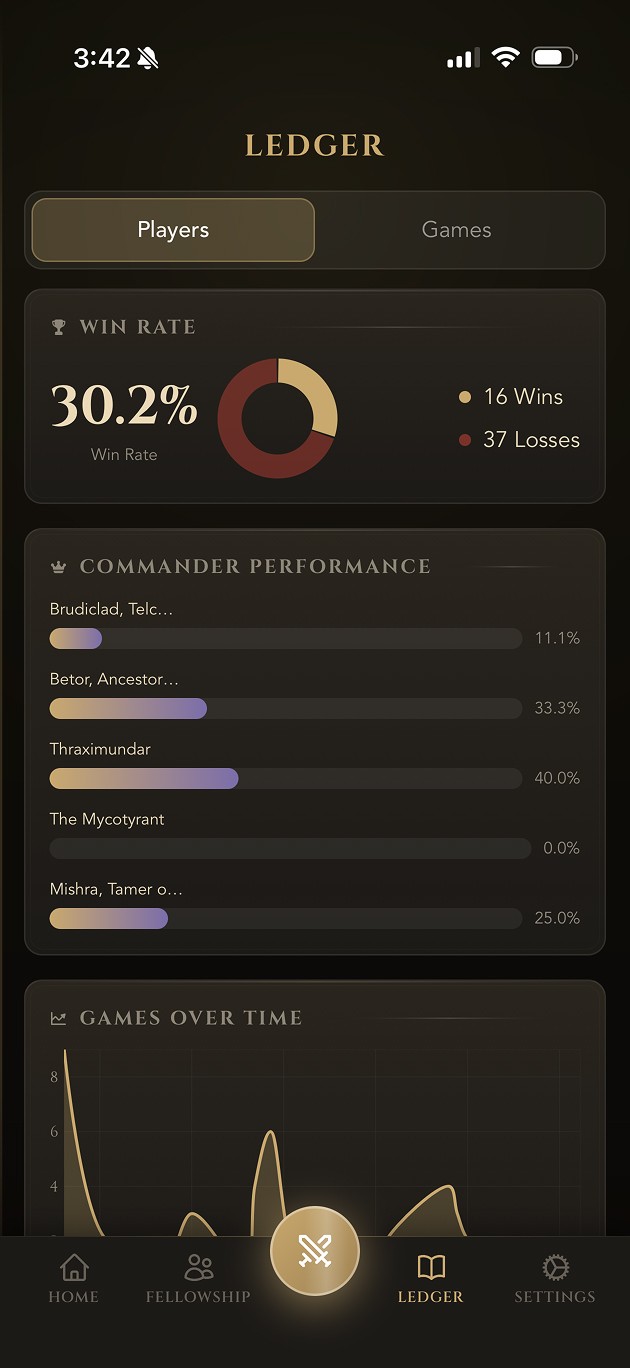
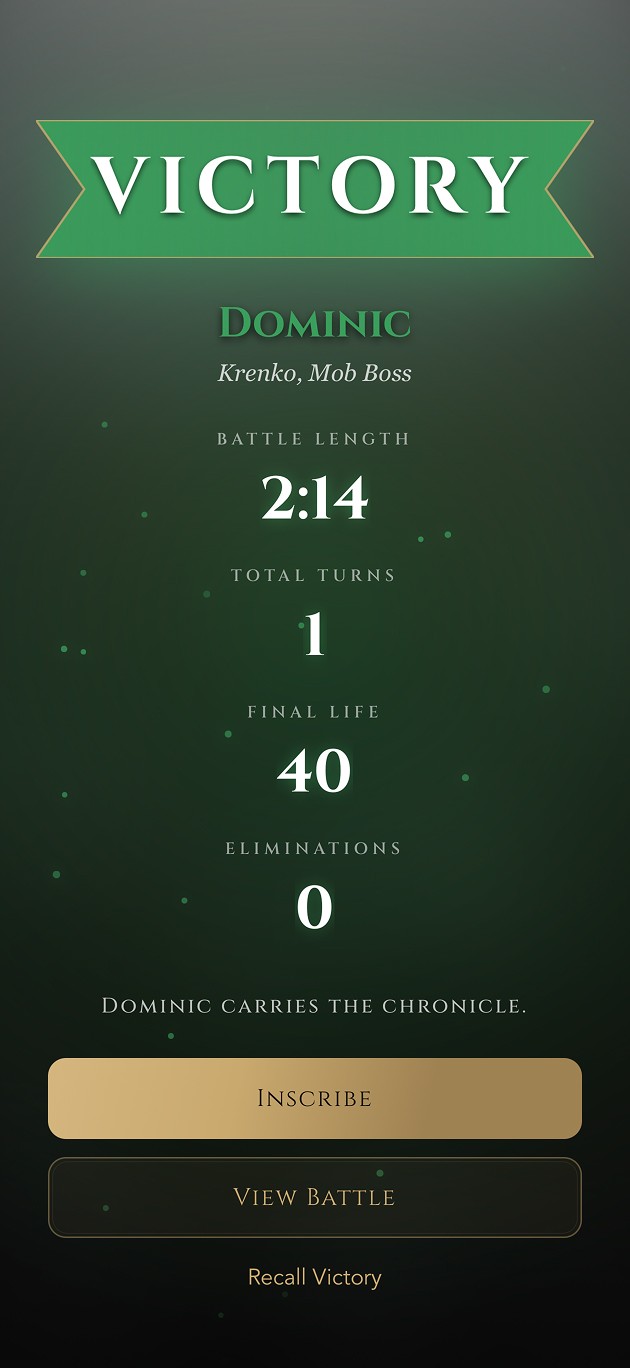
The fastest path to useful data is capture that doesn't interrupt the game. Tome of Legends doubles as the tool your pod already reaches for — a live life and counter tracker — so by the time the game ends, the record of who was at the table and how it played out is mostly built. Confirm the result and you're done. Once the data exists, the analysis writes itself: win rates by matchup, commander performance trends, and head-to-head records across your playgroup.


Stats that reward consistent play
A live pod tracker for life totals, commander damage, poison, and energy — the whole table on one screen. Quick game recording with deck and commander selection. An AI rules judge grounded in the Comprehensive Rules for settling disputes mid-game. Win rates by deck and matchup, head-to-head opponent records, and per-commander stats. Plus Fellowship tracking that shows how your record stacks up across every member of your playgroup over time.


Designed for the table, not the spreadsheet
The biggest risk with a stats app is making it feel like homework. Every decision prioritized speed at the point of capture: smart defaults over empty fields, name recognition over typed input, and a log-it-and-forget-it flow that gets you back to the game fast. The analytics are a reward for consistent logging — not a prerequisite. If it's ever faster to not open the app than to open it, the habit dies.