Give users a
soft landing
on first login
Zero-to-one onboarding for new Lattice users
I designed and built Lattice's new user onboarding flow with personalized content for each of Lattice's key user personas with the goal of boosting user activation. This was Lattice's first attempt at user onboarding.

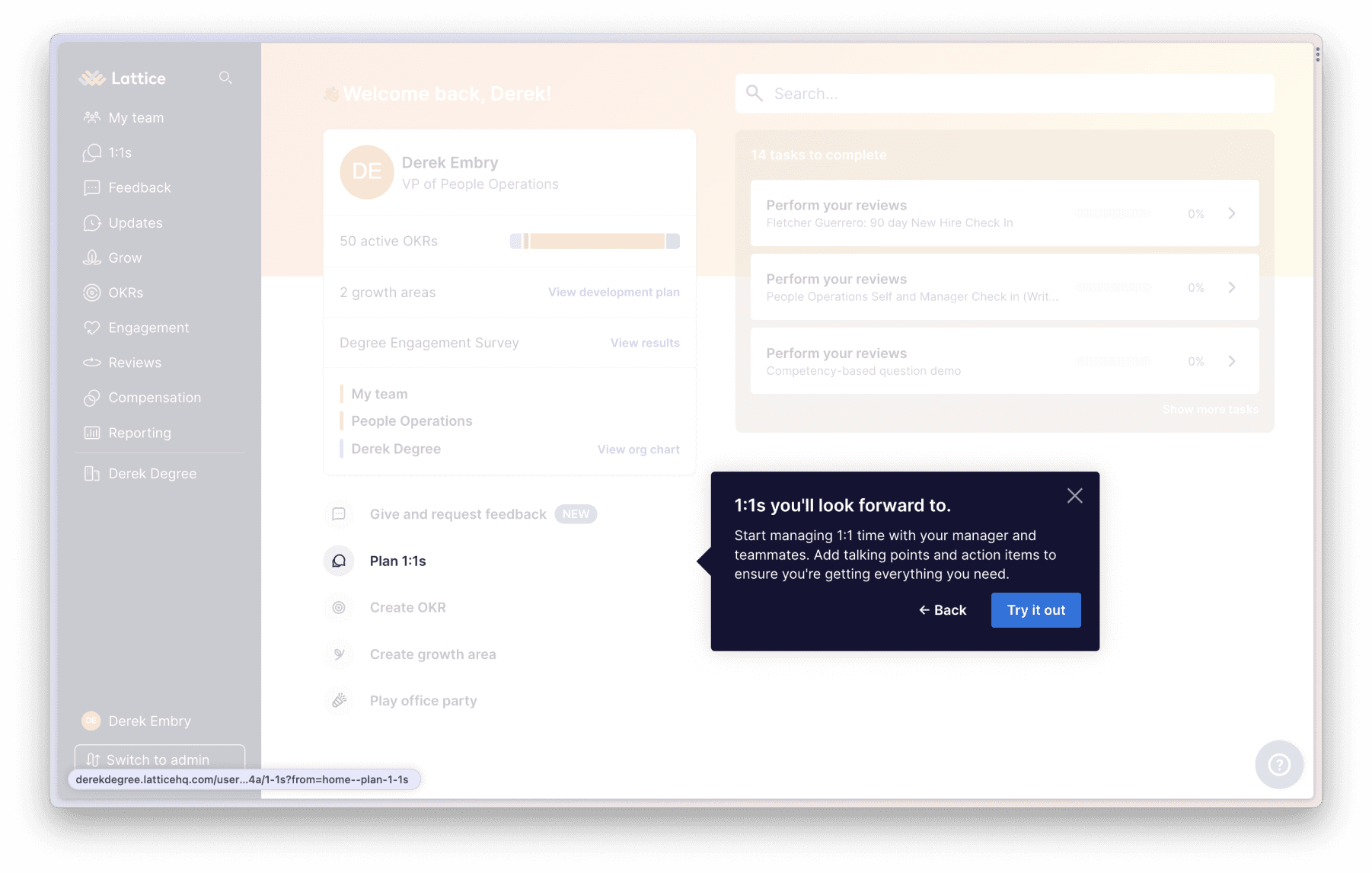
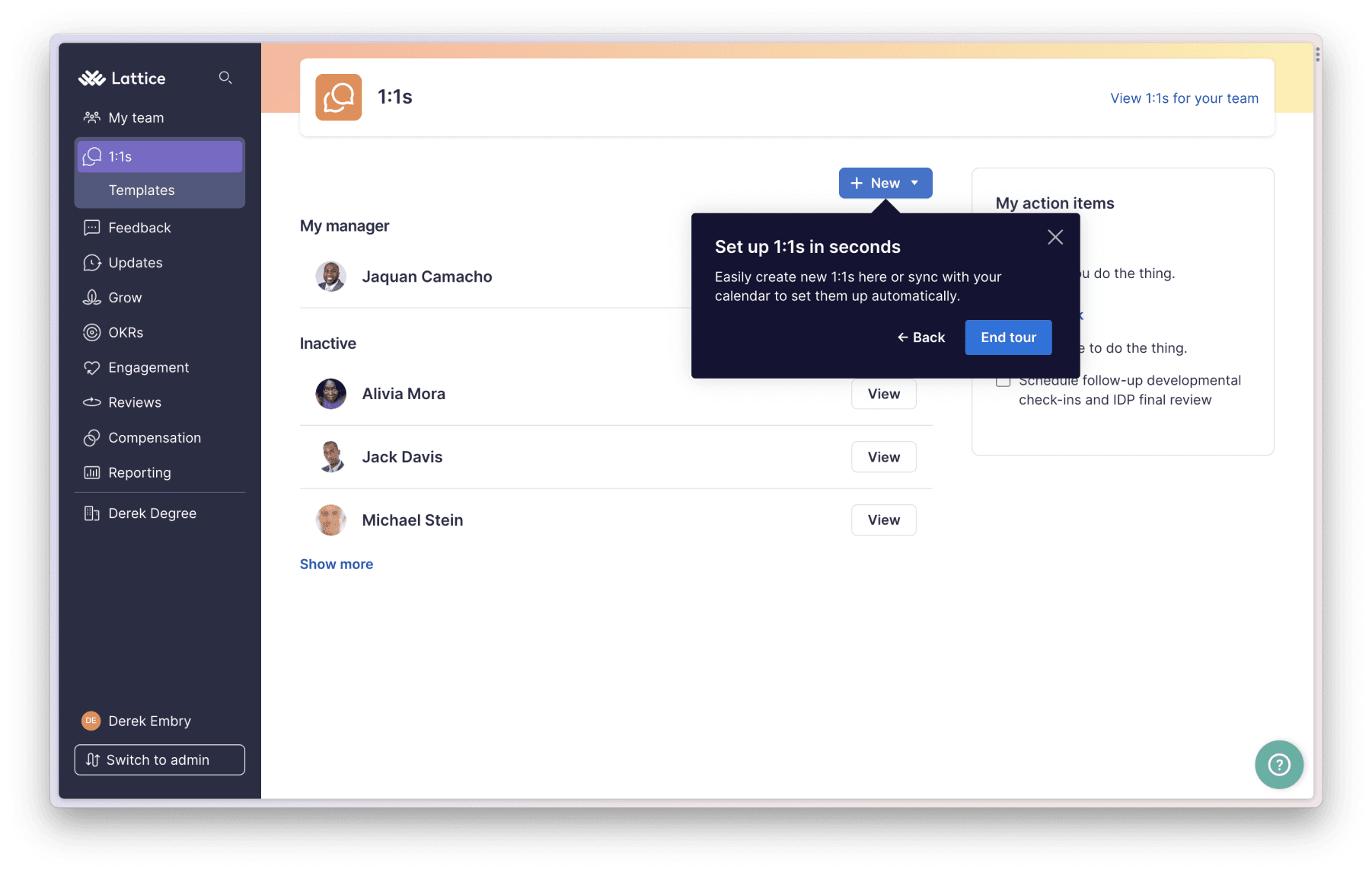
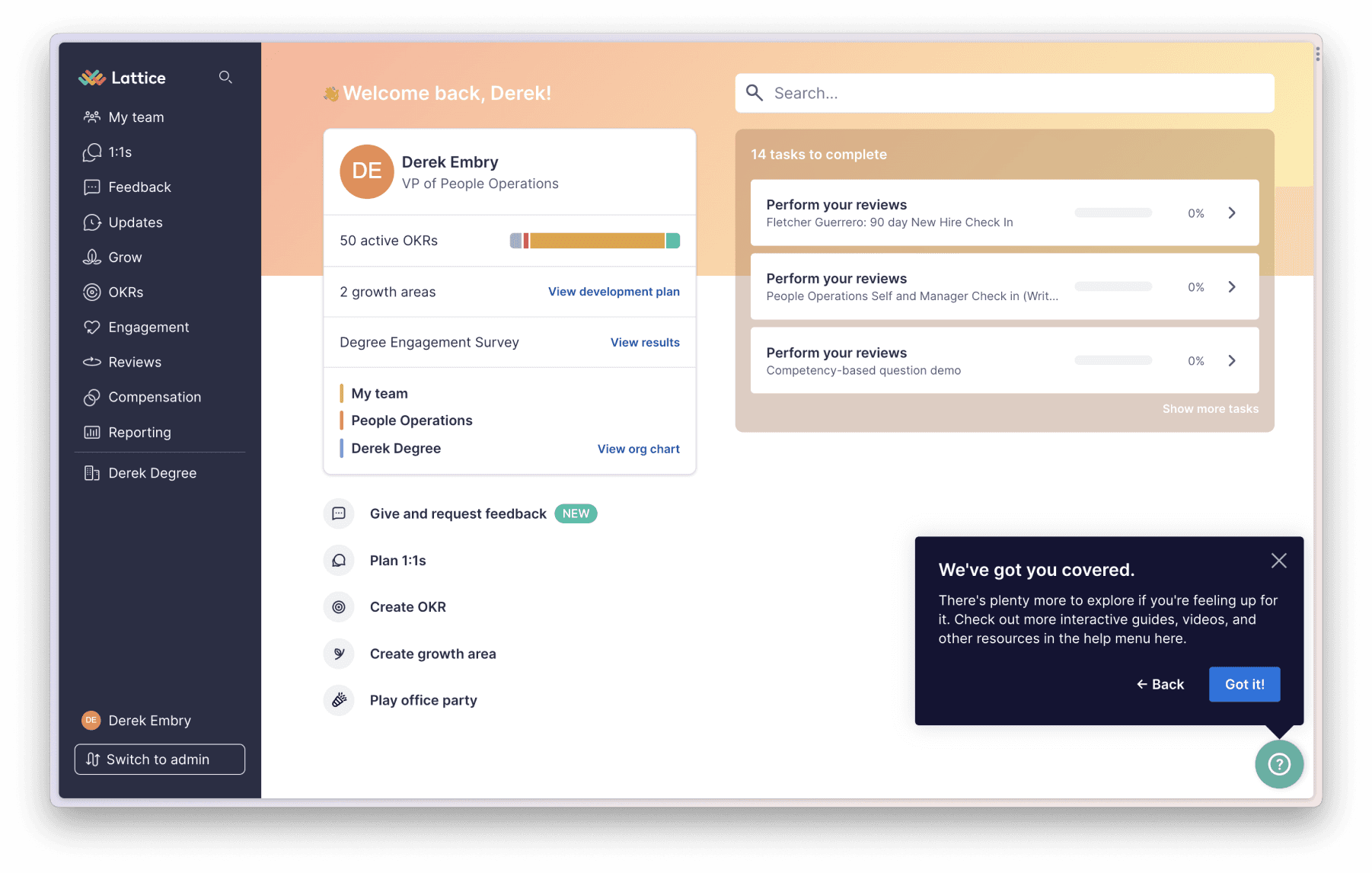
Users didn't know where to start
User engagement had stalled, customers were churning, and our NDR was dropping. Lattice is a wide-reaching HR platform with many tools, but users consistently reported they didn't know where to start.
We relied on HR teams to onboard their companies, but this required tremendous in-person training from our implementation team in the hopes that our clients in HR could then teach everyone else at their company. Expensive investment for an uncertain result.
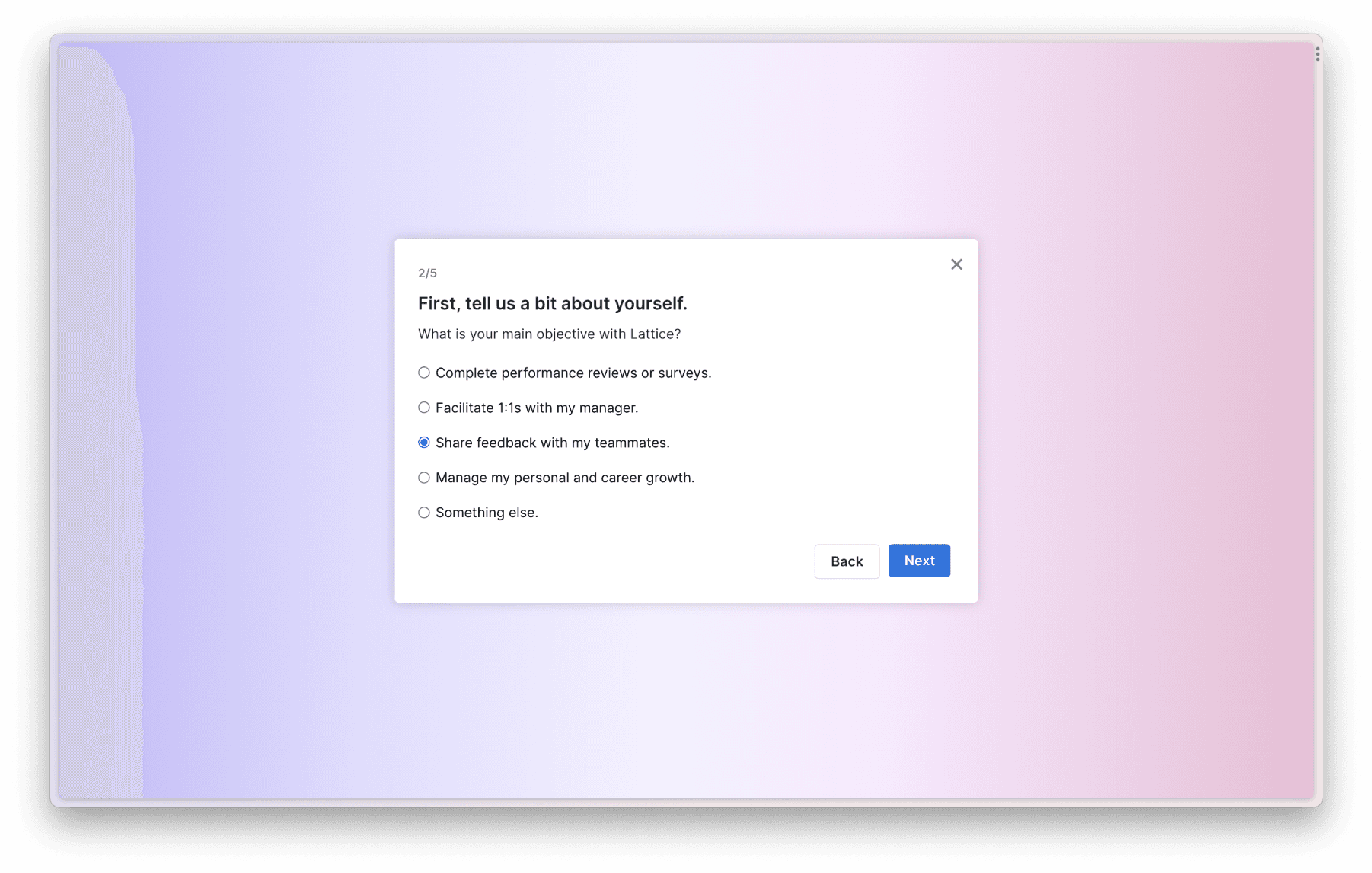
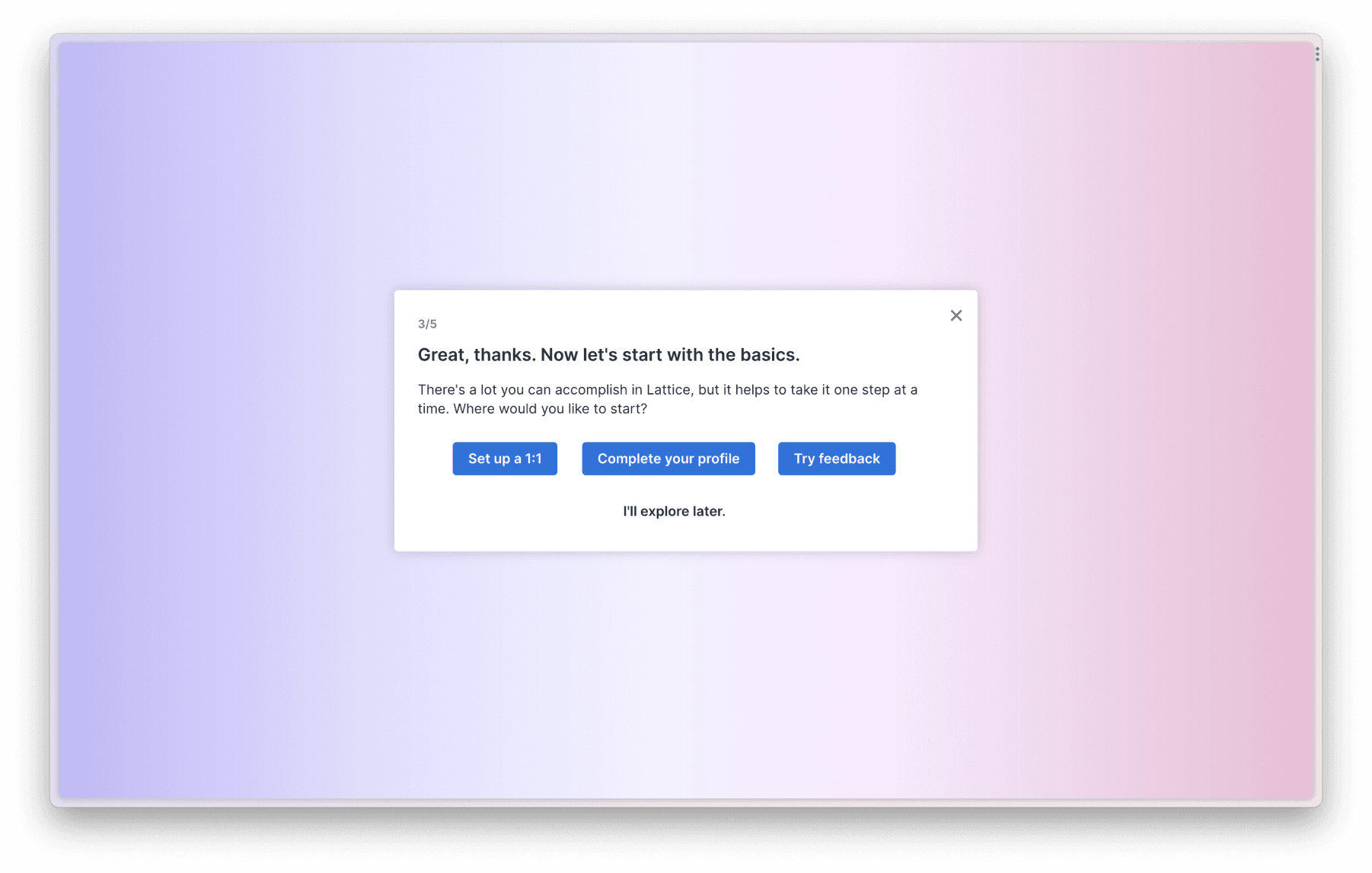
An onboarding flow to boost user activation
I created an onboarding flow for new users and run an A/B experiment to measure impact on user activation.
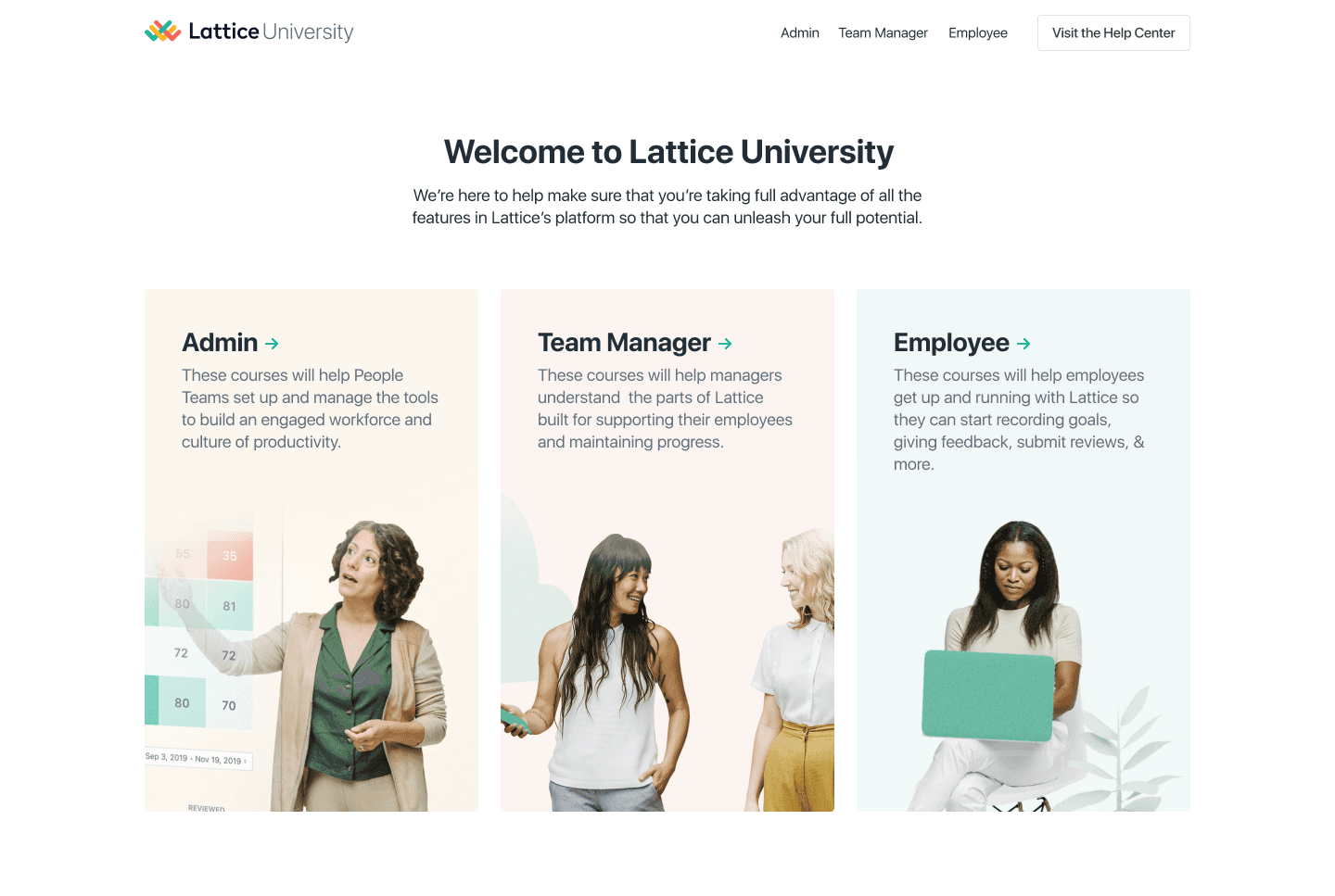
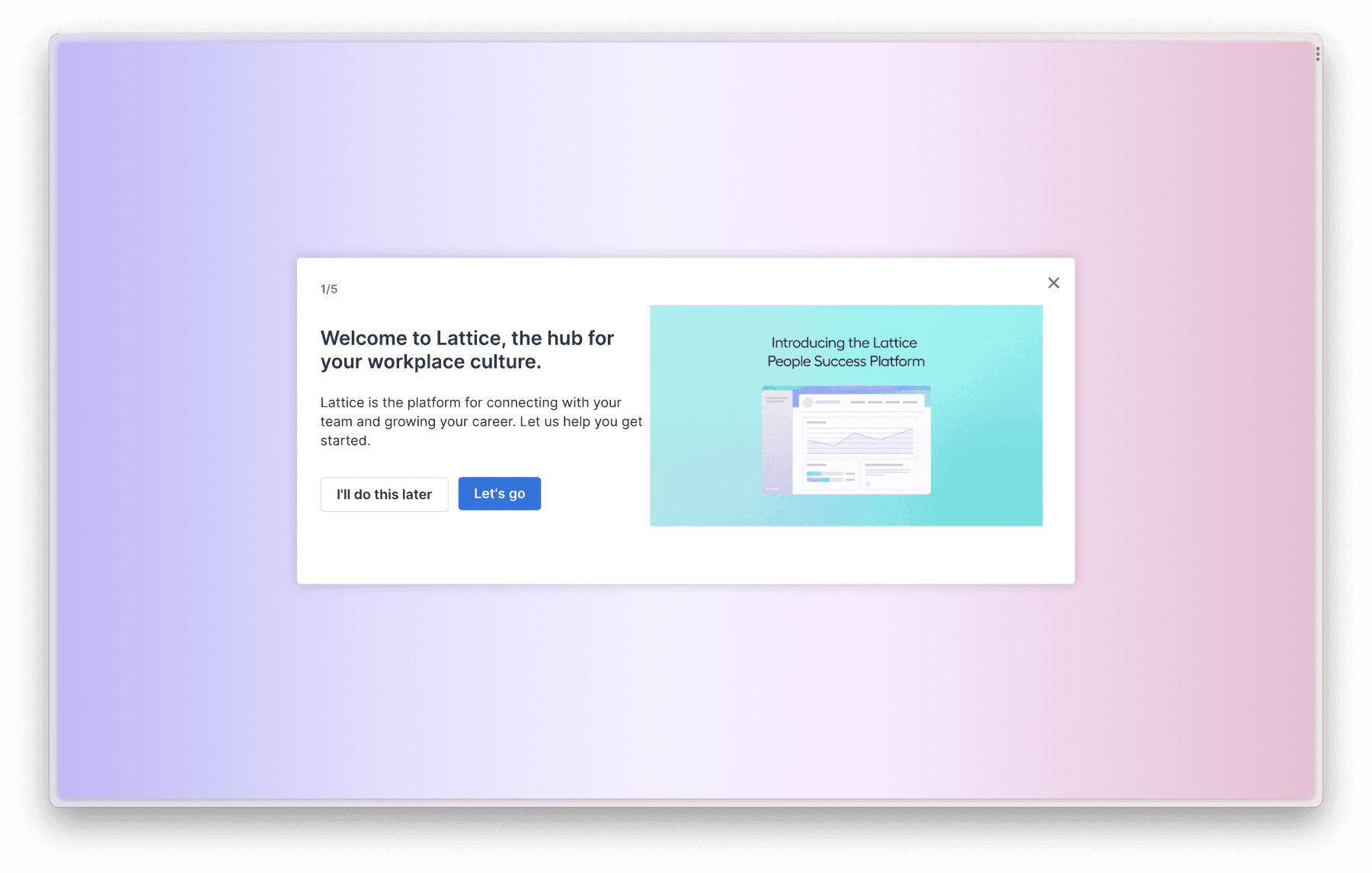
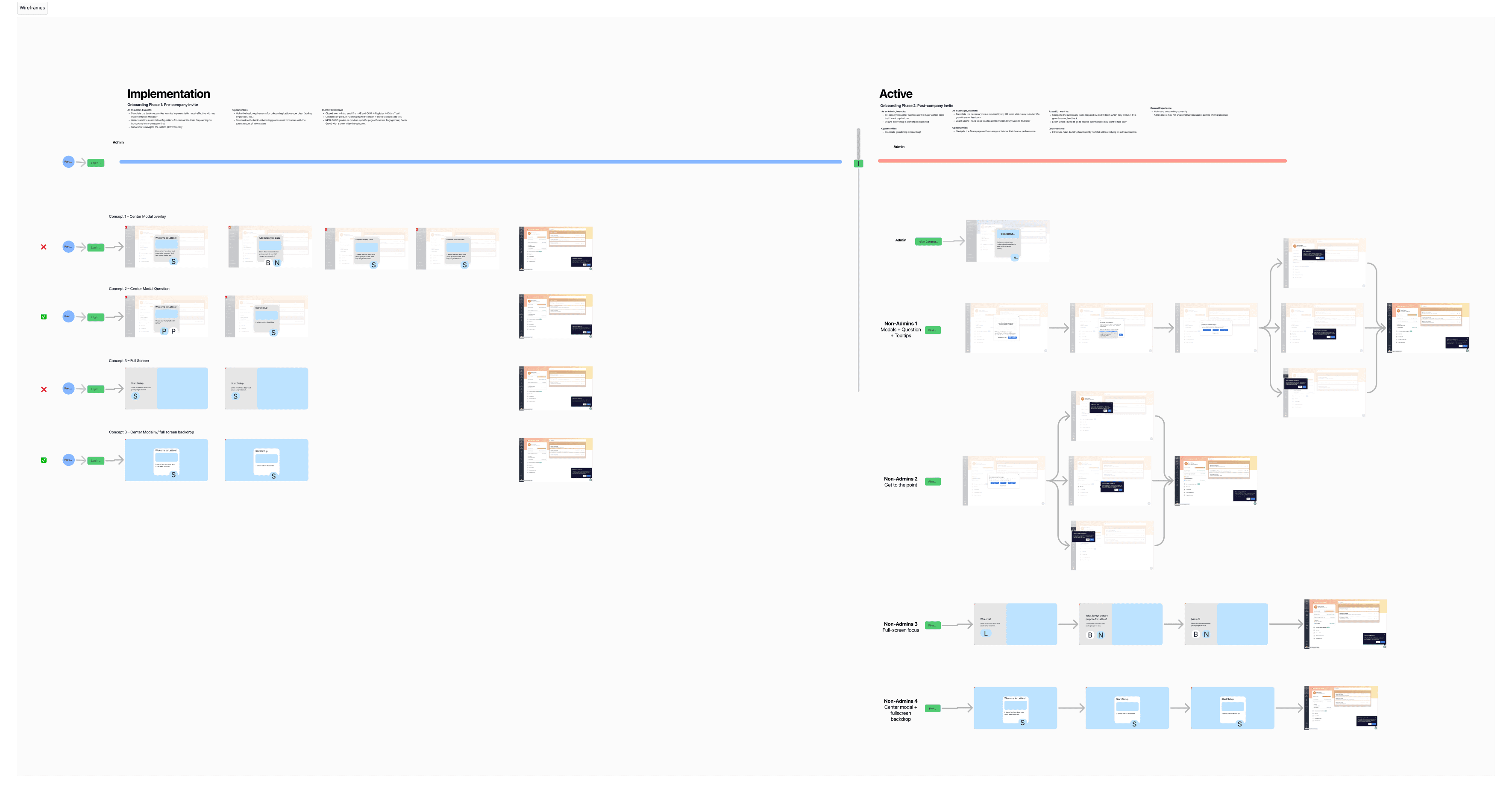
I explored 4 concepts ranging from modal to full-screen overlay that surface at different points depending on user type. Admins (HR teams) see onboarding during implementation while regular users see it after setup is complete.
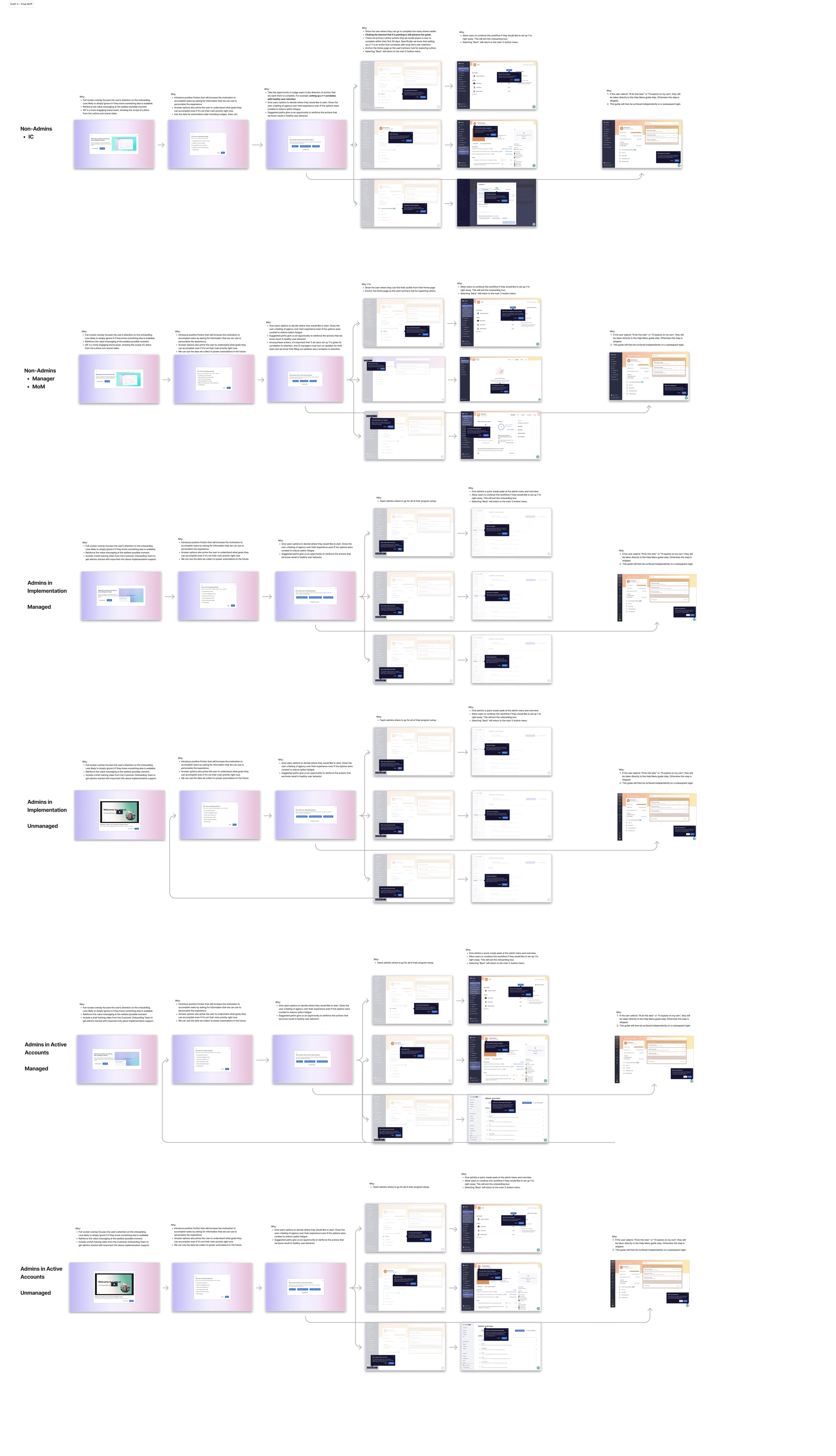
A successful first iteration with room to grow
As Lattice's first full user base A/B test, this experiment taught us a lot about running experiments in B2B environments. Unlike B2C companies that can test on millions of users and reach statistical significance in days, our experiment group was under 10,000 users.
Reaching statistical significance with a 2% lift was a positive signal. It proved we could continue running experiments to improve the product, but it was clear that changing user behavior would require more iteration, especially within our engineering constraints.
Key insights for V2
This project surfaced three insights that would shape how I approach V2:
Lead with one clear action. Working with Data Science, we defined activation as completing one of three key actions. But offering choices likely created decision fatigue. A stronger V2 would guide users toward a single, high-impact action first.
Show the value upfront. I initially assumed the actions would be self-explanatory. They weren't. Adding brief context about what each tool does and why it matters would help users build confidence from day one.
Invest in native experiences. The third-party tool got us to market quickly, which was the right tradeoff at the time. With proven demand, building the flow in-house would unlock a more polished, on-brand experience with greater design flexibility.