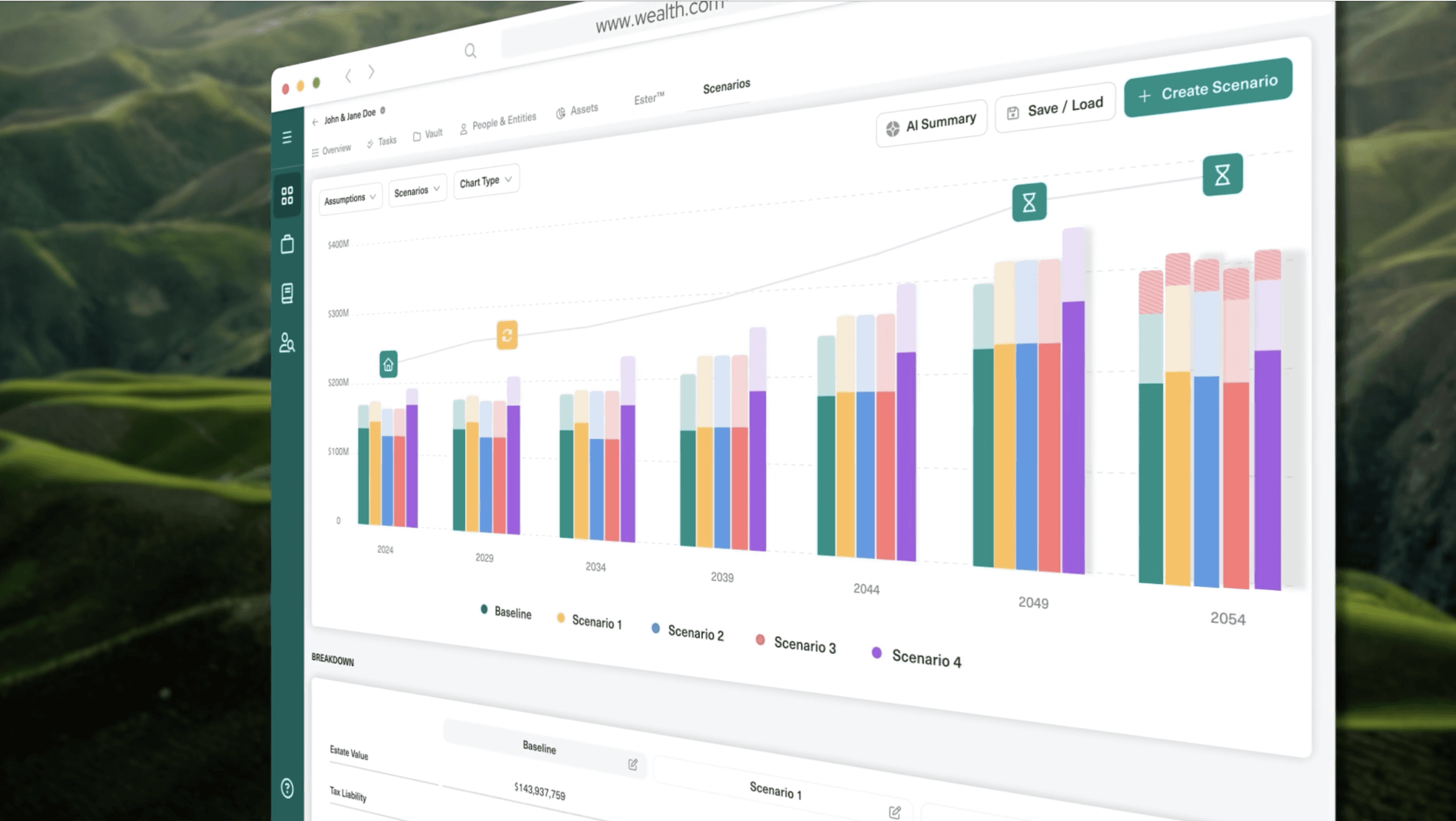
A strategic modeling tool for financial advisors
I led end-to-end design of Scenario Builder™ at Wealth.com—a tool that lets financial advisors compare estate strategies and optimize tax outcomes. This was the company's most significant 2025 launch.

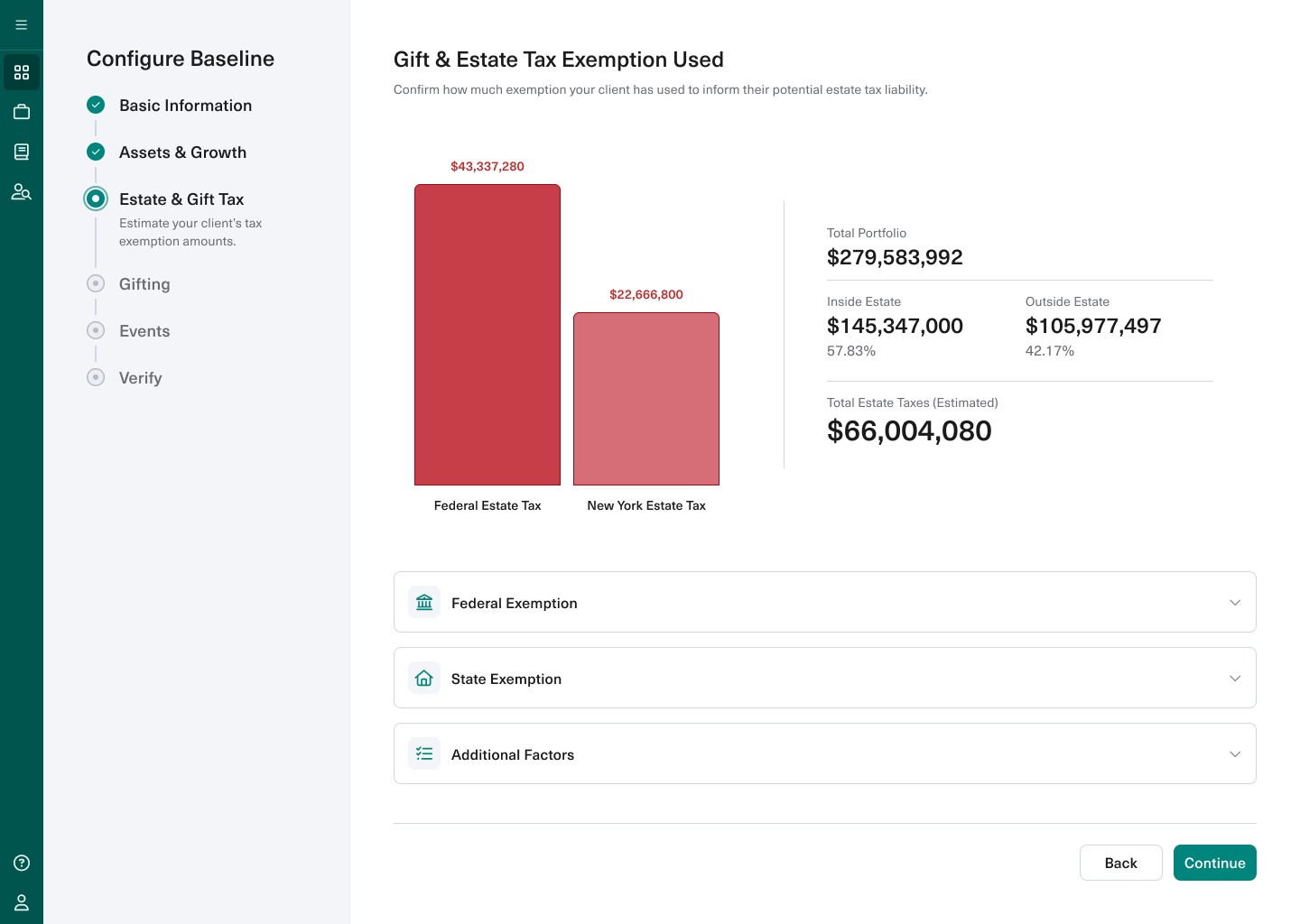
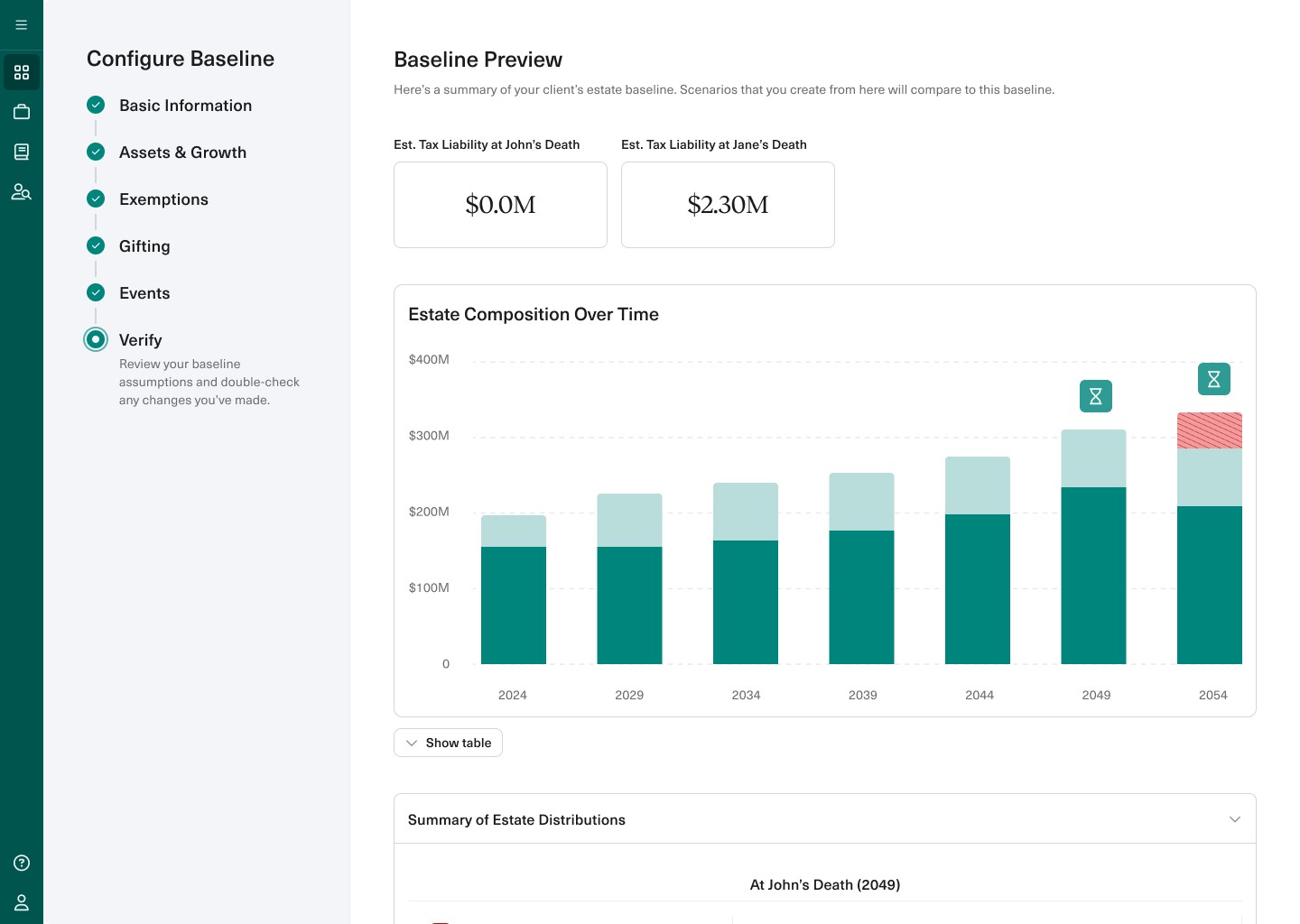
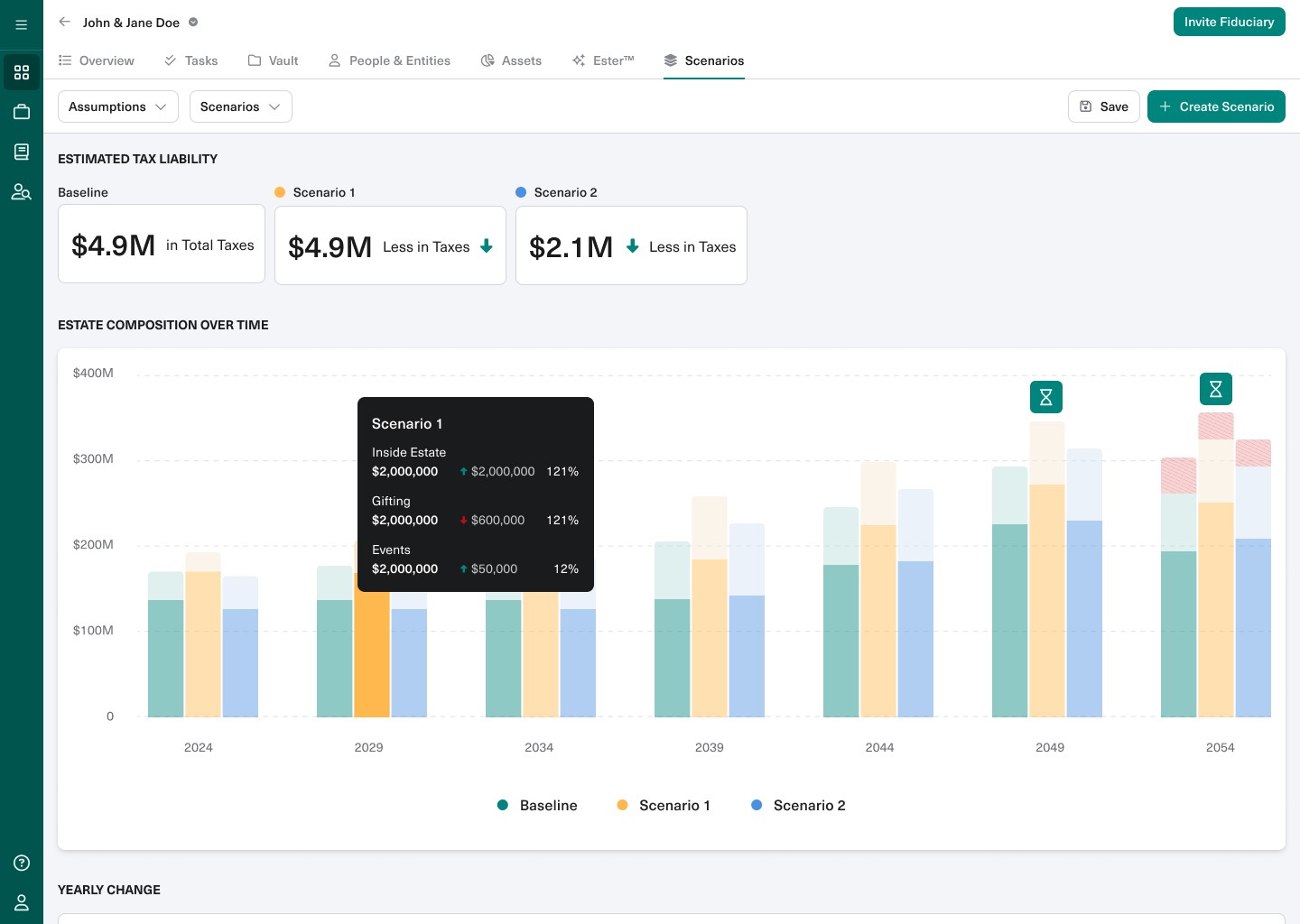
Advisors need confidence their expertise is truly optimal
Financial advisors face a recurring challenge: clients want confidence that their estate plan is the best choice, but it's difficult to evaluate strategies side-by-side and understand the long-term implications of decisions.
Existing tools in the market were either too simplistic or too technical to meet advisors' needs. We needed a solution that was powerful enough to model complex strategies yet intuitive enough to support real-time client conversations.
Early wireframes and concept sketches
Starting with general guidelines from leadership, I created quick sketches exploring potential directions and gathered internal feedback to refine them toward a single concept. Here's one (obviously embarrassing) early sketch of many that helped us refine our direction.
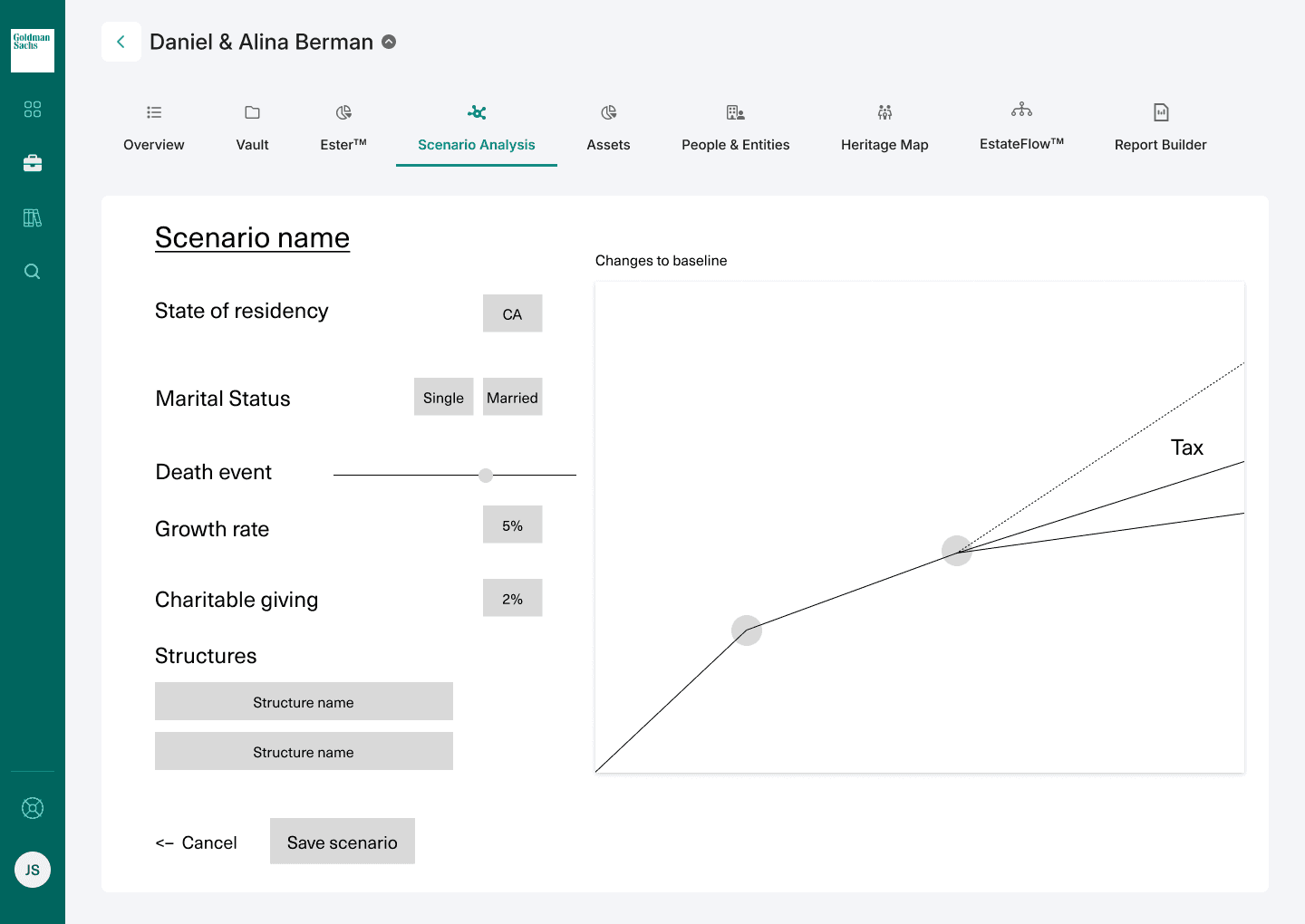
Refining the concept through feedback cycles
After several iteration cycles with company leadership, I narrowed in on a user flow and began introducing visual elements and UI components from our design system.
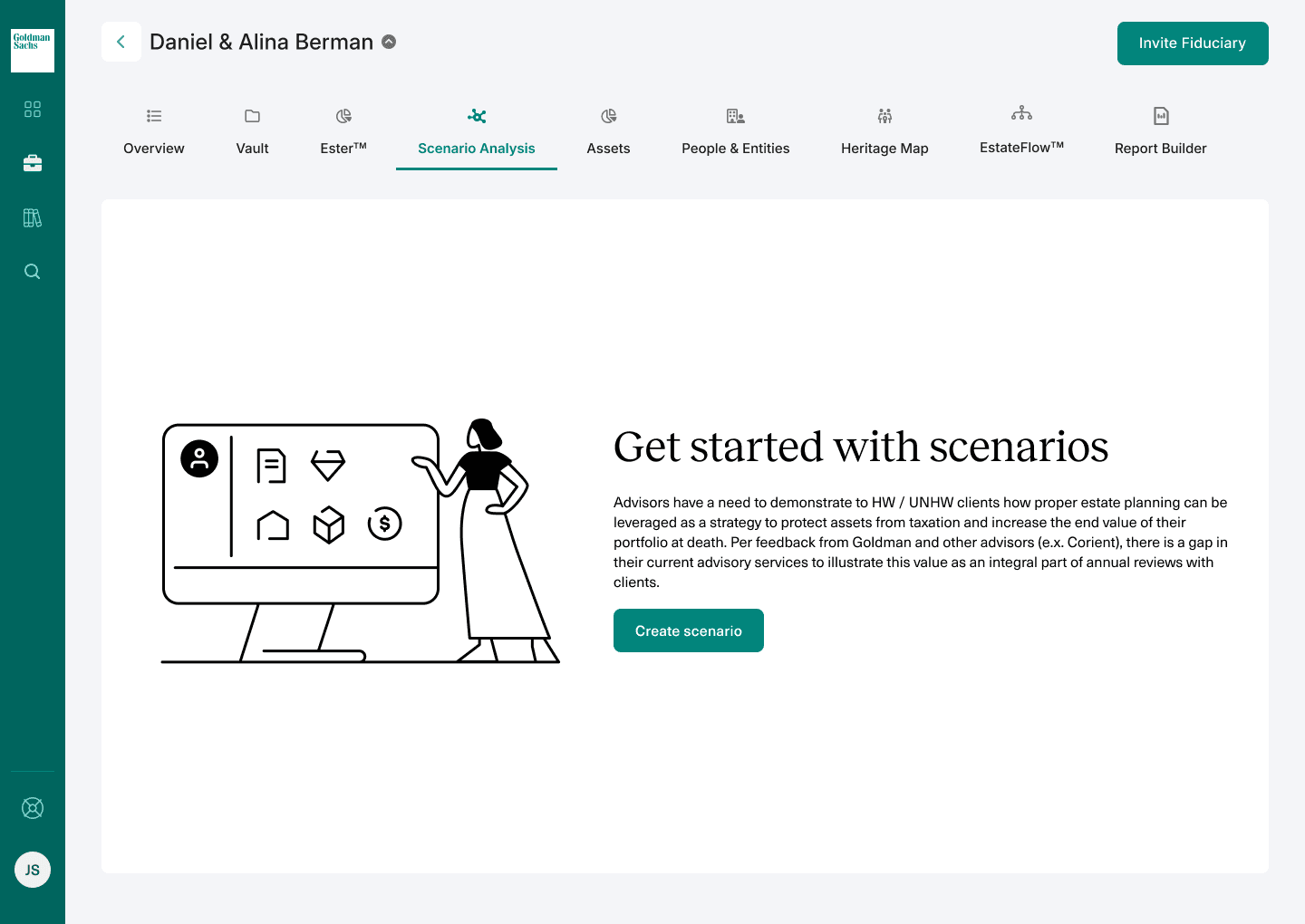
Validating the approach with financial advisors
I built several rounds of prototypes and partnered with our user researcher to conduct 10 interviews with financial advisors. Users confirmed the solution was valuable while offering specific feedback to refine the design.
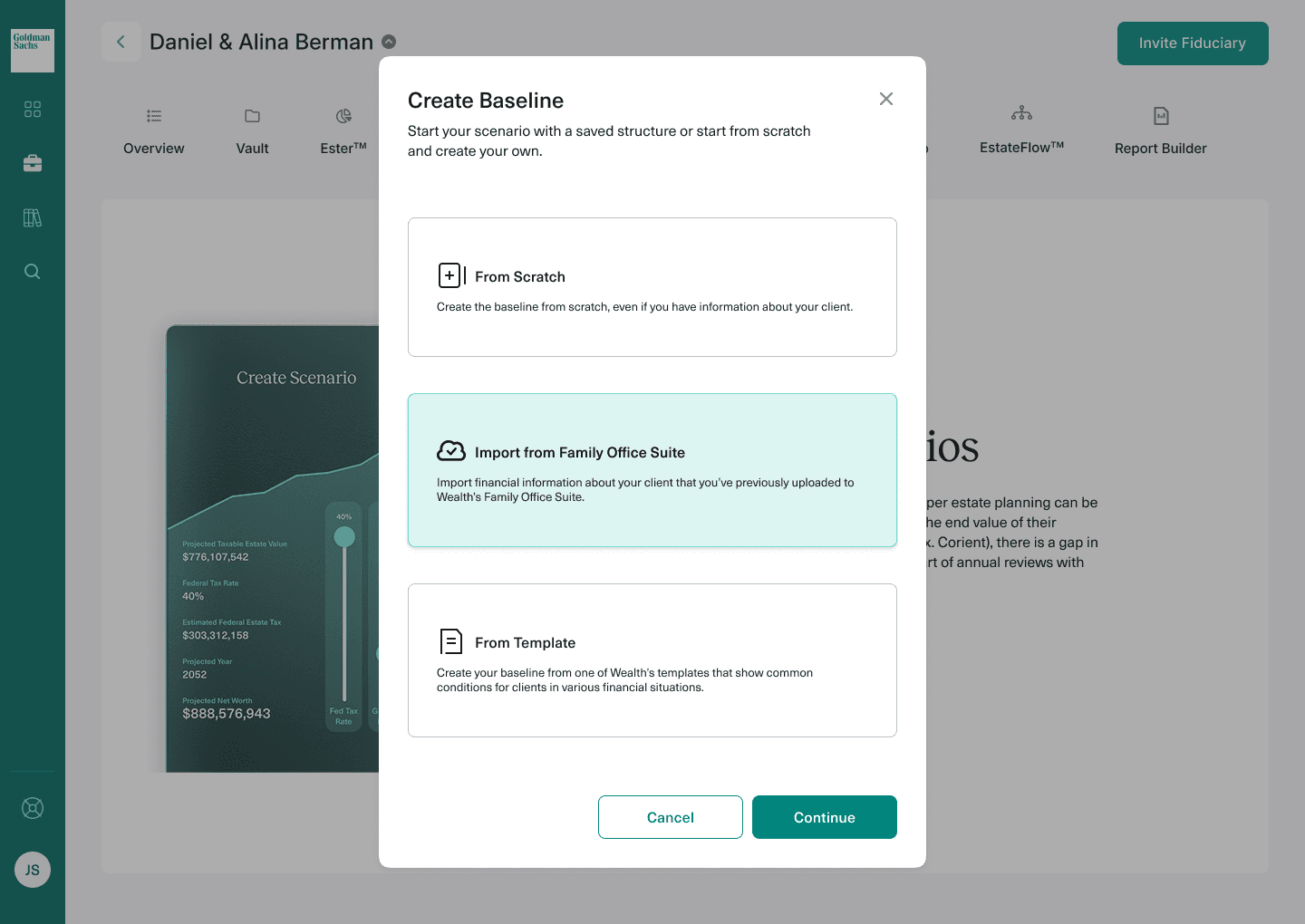
A tool advisors can confidently use with clients
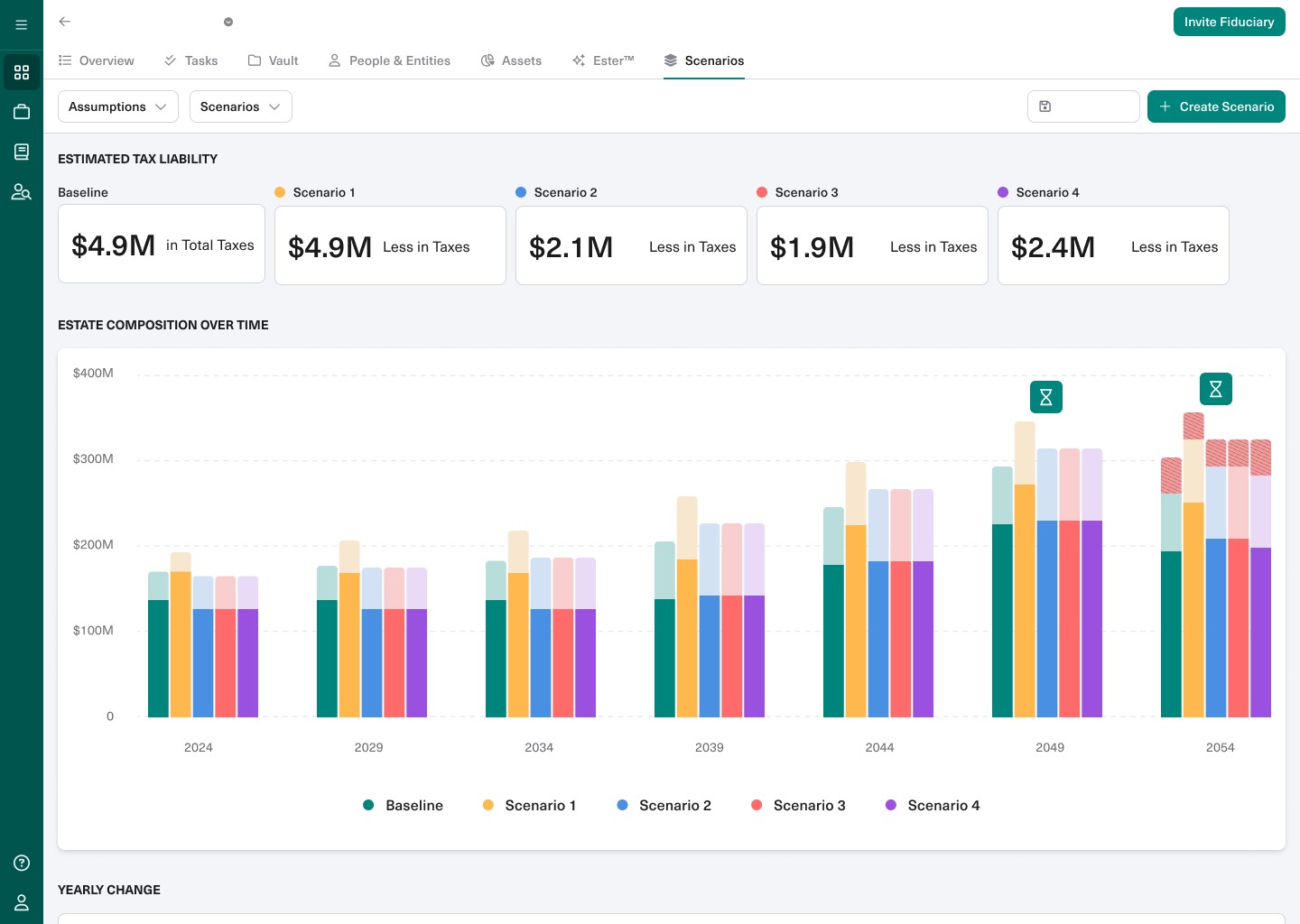
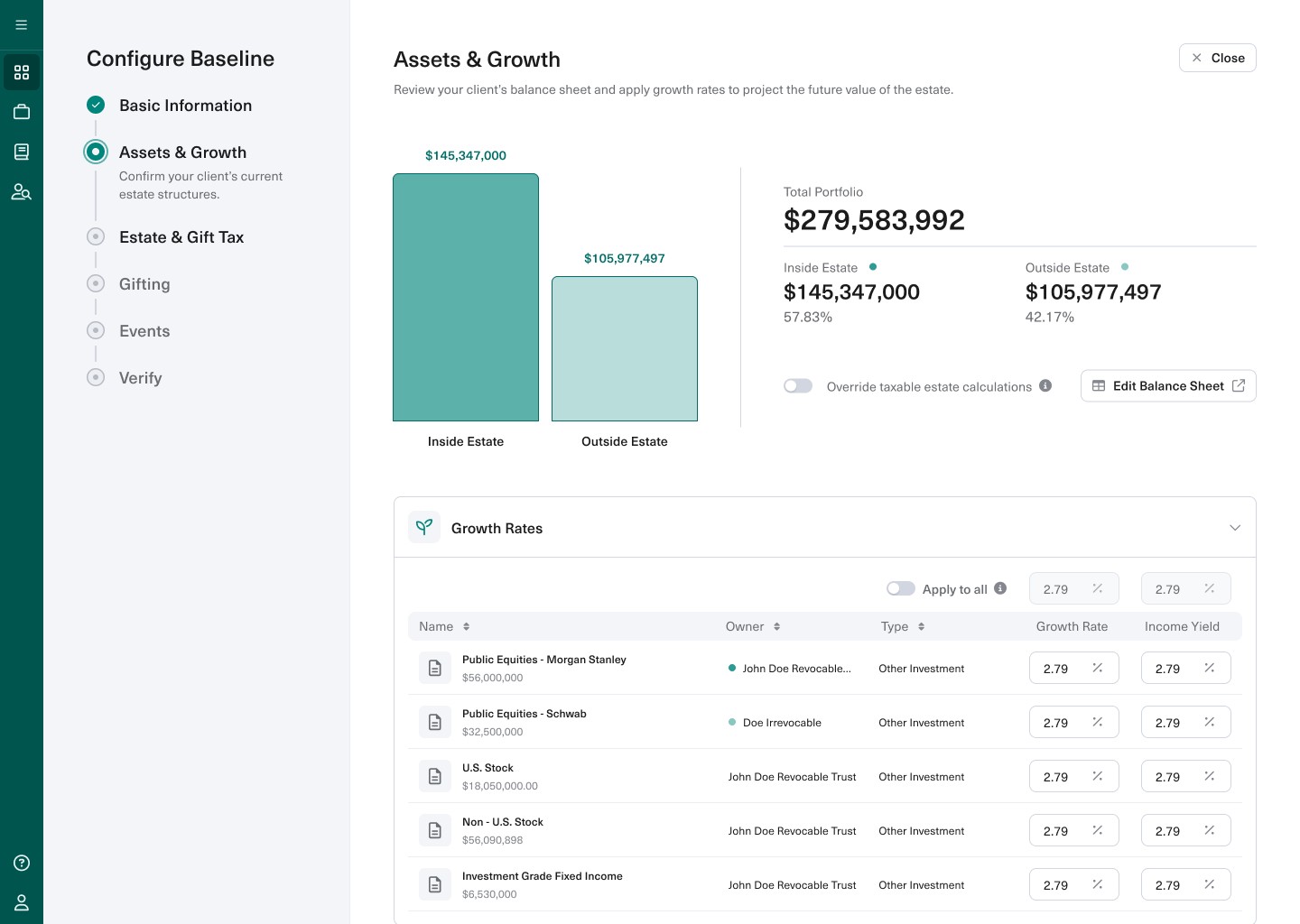
Thanks to user feedback and internal design cycles, we landed on a final version focused on making scenario creation as simple as possible, without losing financial planning nuance, while enabling advisors to clearly identify which scenario provides the best outcome for their client.
What this project reinforced
This project reinforced the value of early cross-functional alignment, particularly with engineering. Bringing product leadership and engineering into the conversation before ideation would have reduced iteration cycles and helped the team anticipate resourcing needs sooner. It's a practice I now prioritize at the start of every project: aligning on constraints and feasibility early so design exploration is grounded from day one.